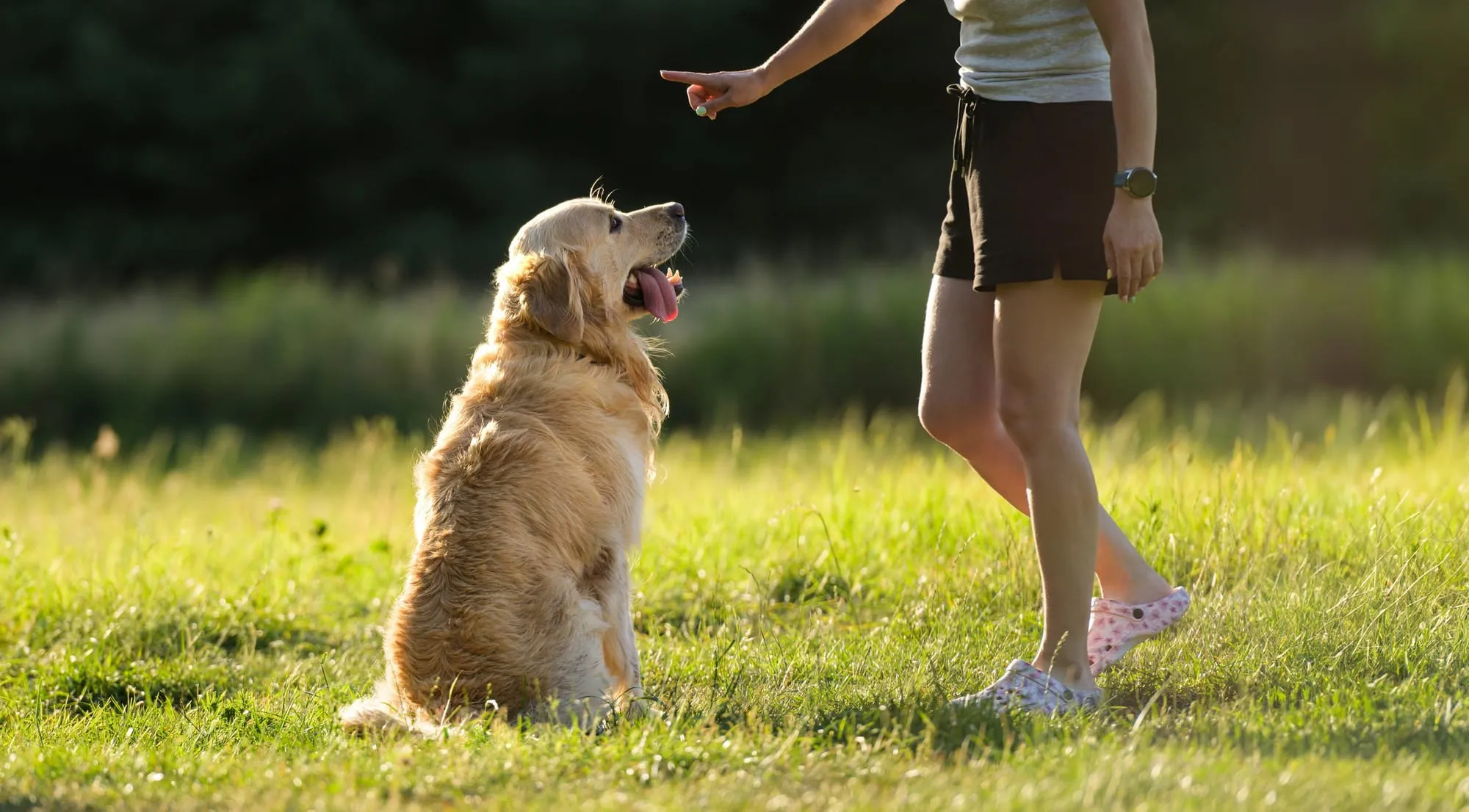
Your dog sits. You reach into your pocket, find the treat, and hand it over. By then your dog has stood up, looked at a bird, and sat again. Which one did you reward?
What the Research Shows
In a study of how dogs learn, 60% of dogs learned the task when the reward came immediately. When the reward came just one second late, only 25% learned it.[1]
The same research tested a fix. When the dogs got an immediate signal the moment they did the right thing, followed by the reward one second later, 40% learned the task.[1] The signal didn’t fully replace an immediate reward, but it recovered much of what the delay had cost.
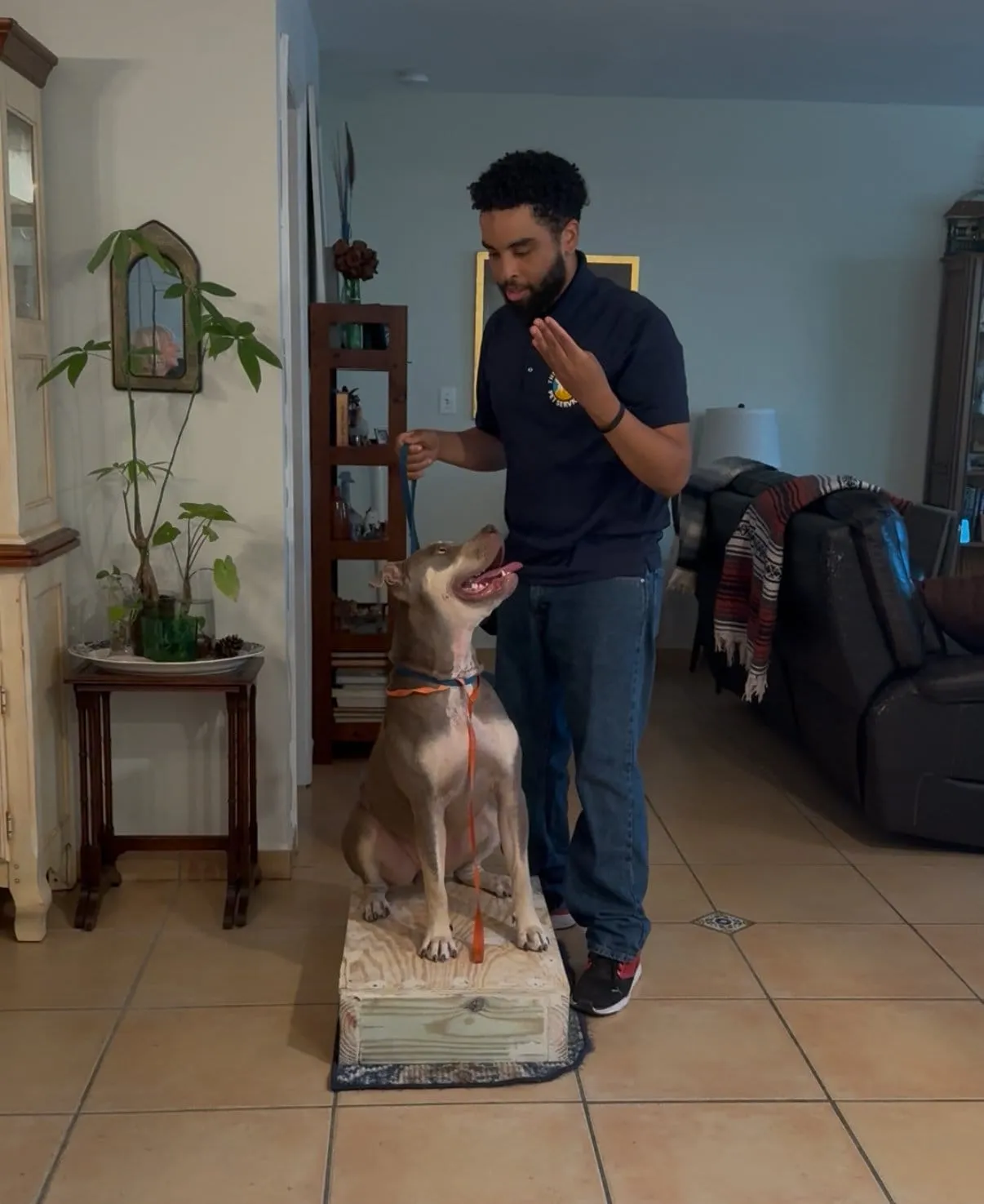
The study also watched owners training their own dogs. In about three out of four trials, owners gave a body signal, such as a hand movement, before their feedback, on average a third of a second earlier.[1] Dogs are unusually skilled at reading human social and communicative behavior,[2] so those small signals carry information whether you mean them to or not.
Why One Second Matters
Your dog connects the result to whatever they were doing at that moment. Late feedback teaches the wrong lesson, or nothing at all. That applies to rewards, and it applies to corrections too. A correction that arrives after your dog has moved on teaches them nothing about the moment you meant.
How to Improve Your Timing
1. Use a marker
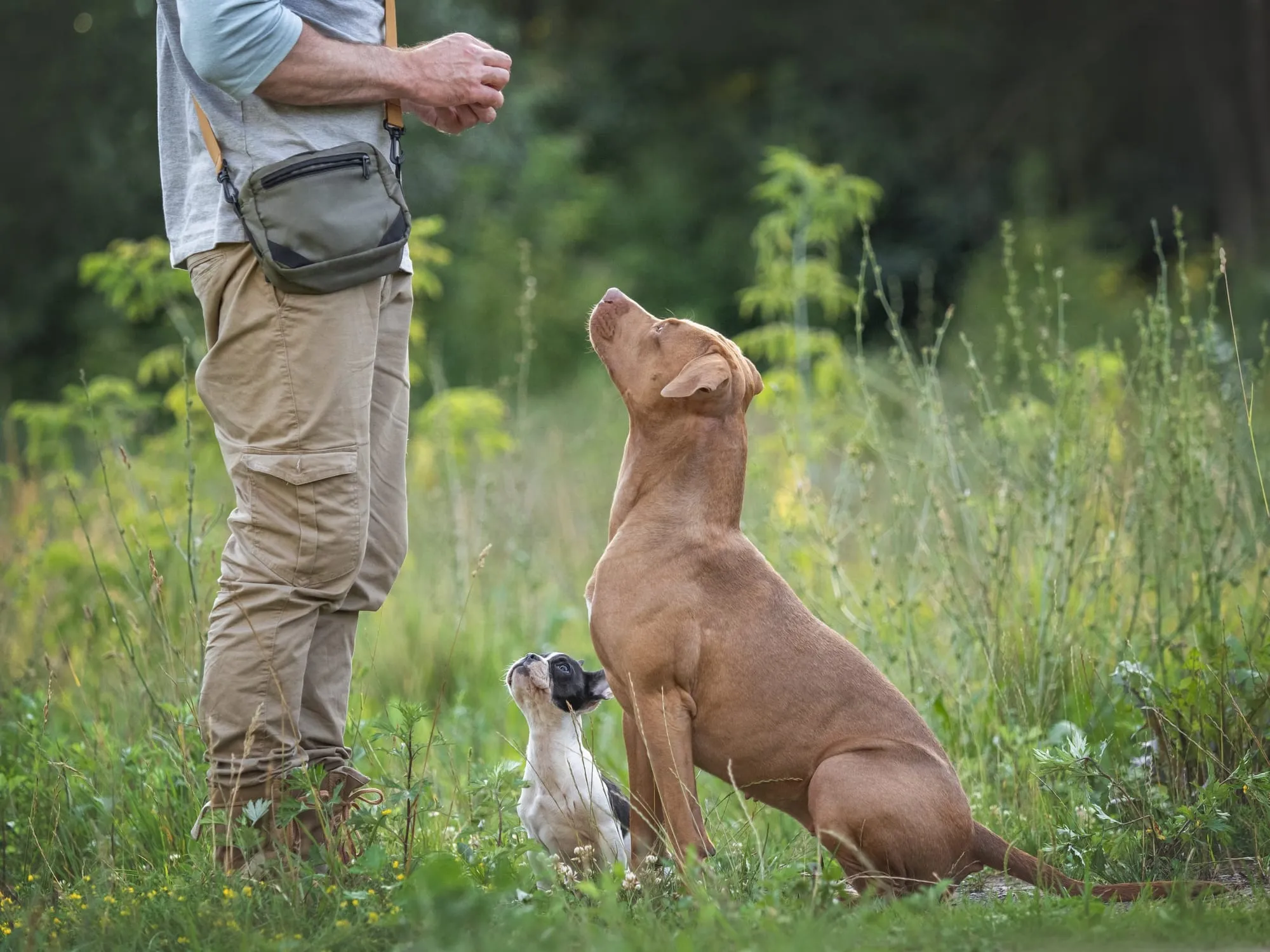
Pick one short word, such as “yes,” and say it the instant your dog does the right thing. The reward can follow. The marker tells your dog exactly which moment earned it.
2. Be ready before you ask
Have the reward in your hand, not in your pocket, before you give the cue. Preparation is half of good timing.
3. Watch your body
Your posture, hands, and tension send messages. Keep your hands still until you mean to signal, so your dog isn’t reacting to accidental cues.
4. Practice without the dog
Toss a ball and say your marker the moment it hits the floor. It sounds simple. It builds the reflex.
5. Start easy
Practice timing on behaviors your dog already knows before you use it on something new or difficult.
How MK9 Helps
MK9 teaches owners to communicate with consistency, timing, and control. Timing is a skill you can learn, and it’s part of why MK9 trains the owner, not just the dog. The dog learns the commands. The owner learns how to lead.
Level II: Refinement focuses on behavior correction, leash reactivity, distraction work, owner handling, and real-world application: the situations where timing matters most.