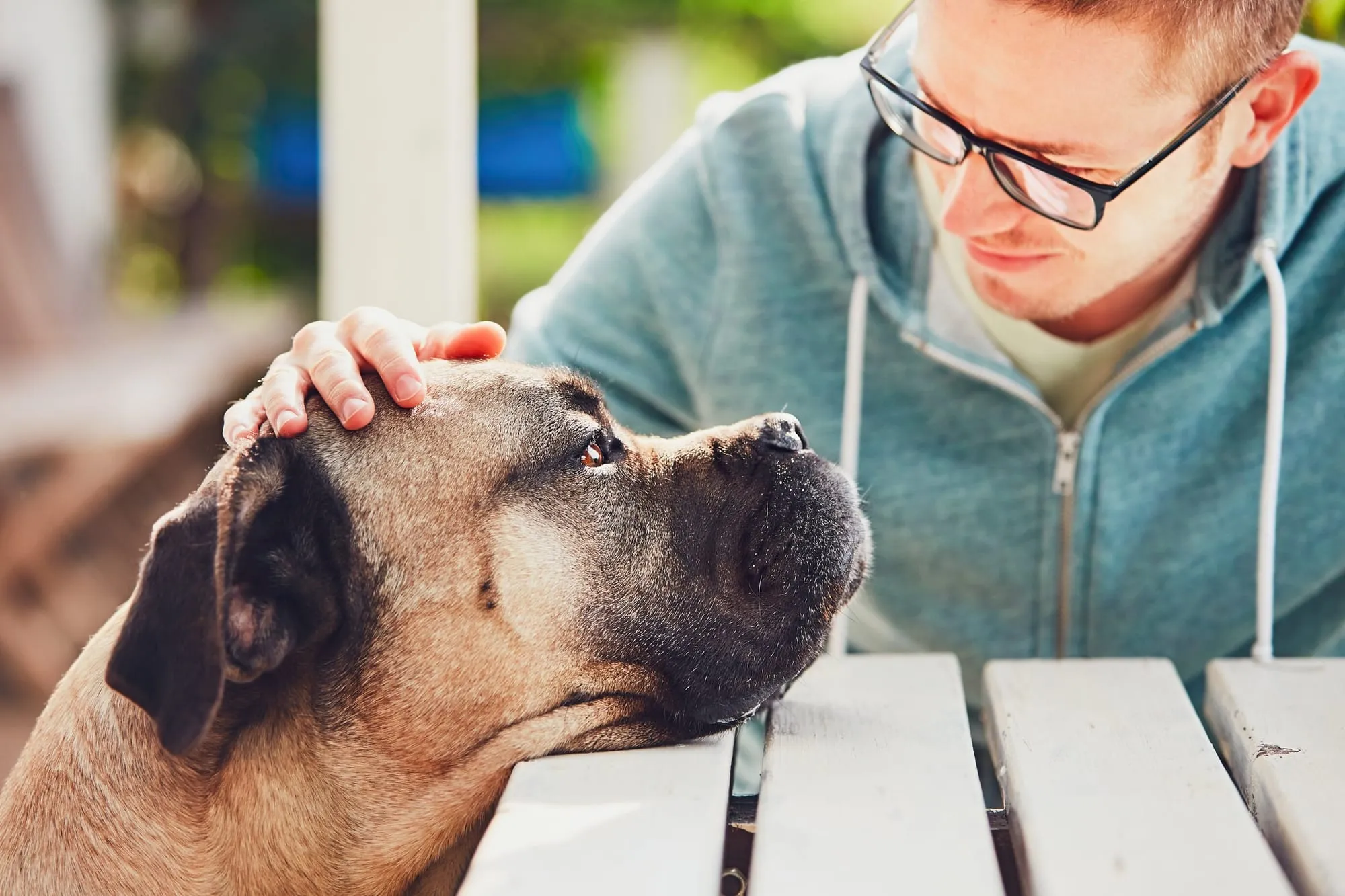
Your dog has always been easygoing. Then, over a few weeks, they start growling when someone sits near them on the couch. Or they snap when you touch their back. Or they stop wanting to go on walks.
Before you treat it as a training problem, rule out pain.
What the Research Shows
A review of problem behavior in dogs and cats looked at recent referral caseloads. It estimated conservatively that about a third of referred dog cases involve some form of painful condition, and in some caseloads close to 80%. Musculoskeletal, gastrointestinal, and skin problems were commonly recognized as significant to the dog’s behavior.[1]
The authors argue that the link between pain and problem behavior is under-reported, and that pain should be considered early, not only after behavior work fails.[1]
Signs Pain May Be Involved
The review describes patterns that make pain more likely.[1] None of them proves it on its own, but together they’re worth taking seriously:
- Sudden onset. A change that appears over days or weeks, especially later in life.
- Aggression when resting or handled. Growling or snapping when the dog is lying down, touched, lifted, or groomed.
- Bites aimed at hands and limbs. Short, quickly stopped snaps rather than sustained attacks.
- Unpredictable mood. A dog that is friendly one moment and irritable the next.
- Changes in movement. Stiffness after rest, an odd sitting or lying posture, weight shifting, or reluctance to use stairs or certain floors.
- New avoidance. Freezing or stopping on walks, or avoiding places the dog used to enjoy.
- Sleep and comfort changes. Restlessness at night, frequent stretching or shaking.
What to Do
1. See your veterinarian first
Describe exactly what changed and when. If your dog’s behavior changes suddenly, or they become irritable when touched, talk to your veterinarian. Training can’t fix discomfort.
2. Keep a record
Write down when the behavior happens and what came before it. Short videos of your dog walking, getting up, and lying down can help your veterinarian see what you see.
3. Manage safely in the meantime
Give your dog space to rest undisturbed, and avoid handling the areas that seem sore. If there has been a bite or near-bite, keep children and visitors away from the situations that trigger it.
4. Then address the behavior
Even after pain is treated, a dog may have learned to expect discomfort in certain situations. That learned pattern can need its own plan.
How MK9 Helps
It’s one reason MK9 doesn’t diagnose through a form. Serious behavior cases are reviewed personally by G before a program recommendation is made.
Level III: Transformation is built for complex cases: aggression concerns, resource guarding, fear-based behavior, and bite history or near-bite incidents. These cases require careful evaluation, honest owner participation, and a structured plan.