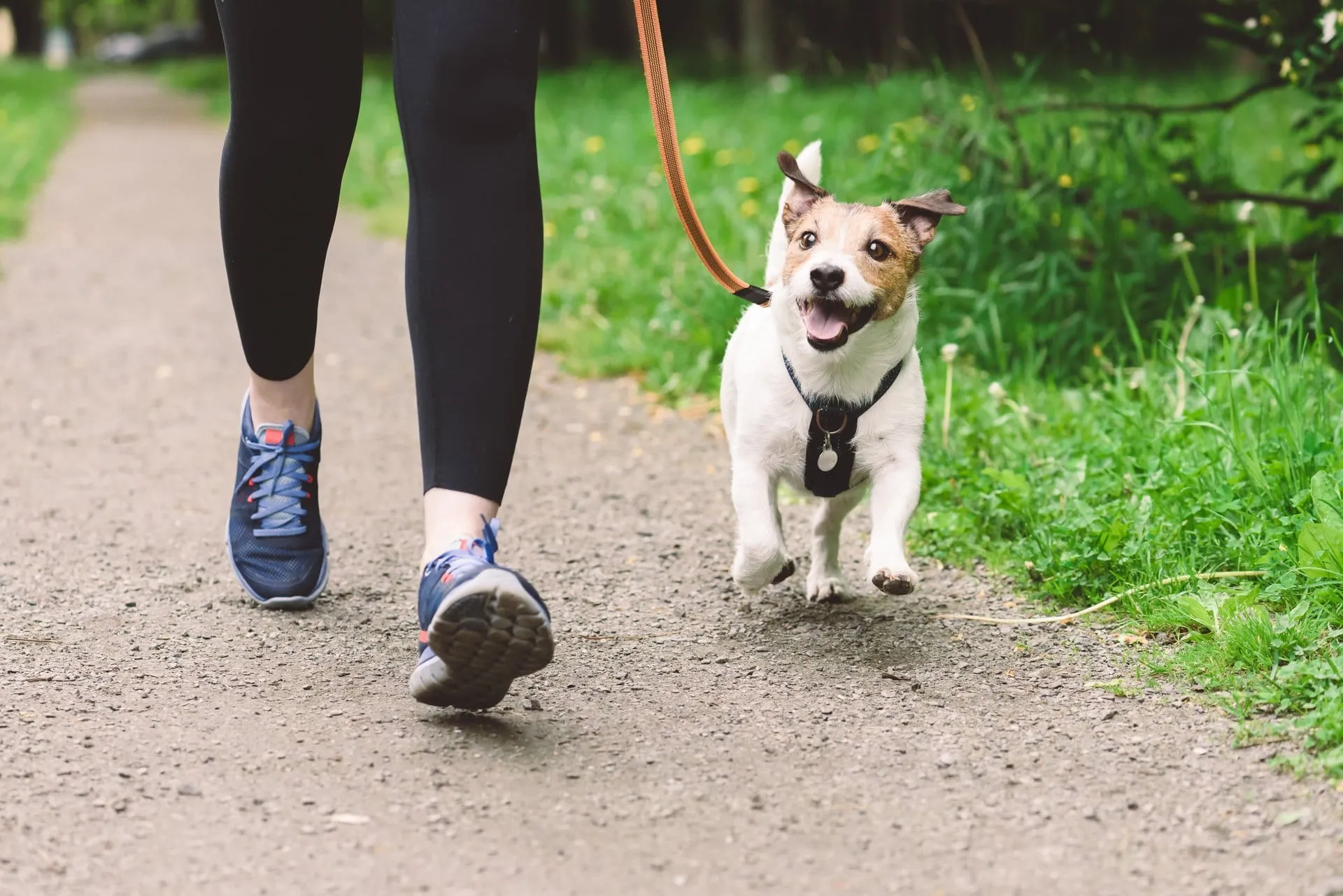
Miami sidewalks soak up sun all day. The air can feel warm but manageable while the pavement under your dog’s paws is far hotter.
How Hot Pavement Gets
Washington State University’s veterinary teaching hospital reports that at an air temperature of 77°F, asphalt can reach 125°F. At 86°F air, asphalt reached 135°F, and at 87°F it reached 143°F.[1]
In Miami, 77°F is a mild day.
The Seven-Second Test
Before a walk, press the back of your hand on the pavement. If you can’t hold it there for a full seven seconds, it’s too hot for your dog’s paws.[1]
Test the surface your dog will actually walk on. Sidewalks, asphalt, sand, and wooden boardwalks all heat differently, and a shaded path can be very different from the parking lot next to it.
Safer Walks in the Heat
Walk early or late
Move walks to early morning or late evening, when the pavement has had time to cool.[1]
Choose grass and soil
Grass and soil stay cooler than asphalt and concrete. Plan routes through parks and along grassy edges where you can.[1]
Keep it short at midday
If your dog has to go out in the heat, keep it brief and stay in the shade.
Watch your dog
Lifting paws, pulling toward shade, slowing down, or refusing to walk are signs your dog is uncomfortable. If you see limping or damaged paw pads, contact your veterinarian.
Keep Training on Hot Days
Heat doesn’t have to mean a day off from structure. Short sessions at home, a calm “place,” waiting at doorways, and impulse control can all happen indoors. Then take the same skills outside when it cools down.
How MK9 Helps
MK9 trains for real-world control: sidewalks, cafés, elevators, family gatherings, and travel. Living in Miami means planning that training around the heat. The Discovery Call is where we look at your dog, your routine, and the right program.